
As California Native American Day (September 27) nears, CalVet salutes the more than 13,200 Native Americans among the state’s 1.5 million military veterans and their families.
Add Coby Petersen, CalVet’s deputy secretary for the Veterans Homes Division for the past decade, to the list. Petersen is a retired U.S. Army colonel, is one-quarter Navajo, and his military lineage goes back 138 years.
“We have a proud history of service,” Petersen said. It’s one he became more interested in after attending Northern Arizona University, joining the university’s ROTC program and then being commissioned into the Army in 1987.
“I don’t look Native American,” Petersen said. “Growing up in Flagstaff (Arizona), where there’s a large population of Navajo, I wasn’t fully aware of their struggles. My mother is a beautiful, unmistakably Navajo woman, but I was just a typical kid immersed in school, friends, and sports.”
“Serving in the Army with Native Americans, I became more connected to my family history,” he said.
In 2004, NAU student Bruce James Gjeltema began interviewing family members about Petersen’s great-grandfather for his doctorate dissertation titled, “Jacob Casimera Morgan and the Development of Navajo Nationalism.”
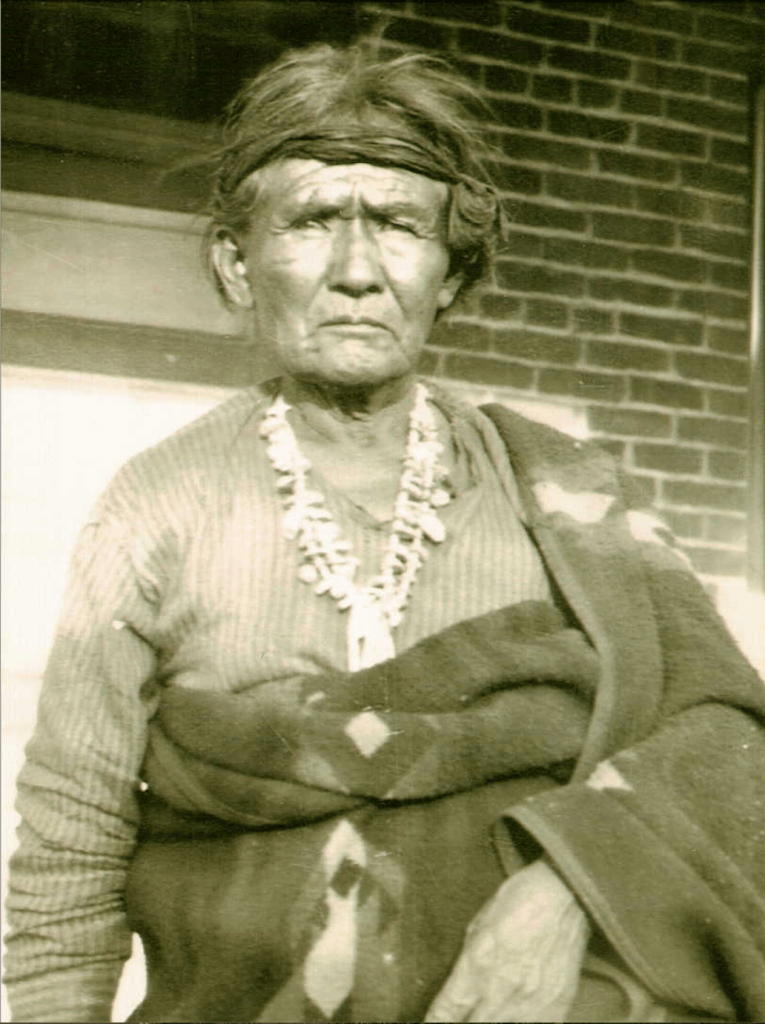
“Through Bruce’s book, details emerged that instilled so much pride in my Navajo family and the incredible survival, sacrifice, and history behind them, including military service,” Petersen said.
He learned that his great-great-grandfather, Casimera Morgan, signed on as an Army scout in May 1886, aiding the 6th Cavalry as it pursued and forced the surrender of Apache chief Geronimo later that year. Casimera received an Army Indian Wars Medal along with a small pension for his efforts.
“My father has his old gun — a Winchester-type,” Petersen said. “It could very well have been his scout rifle.”
Jacob Casimera “J.C.” Morgan, Casimera Morgan’s son and Petersen’s great-grandfather, didn’t serve but played a key role in Navajo affairs for more than three decades. After converting to Christianity in the late 1890s, he went to college in Virginia and then became an advocate for Navajos. That included leading the Navajo Progressive League, an organization dedicated to improving their living conditions.
He opposed the Bureau of Indian Affairs’ “Indian New Deal” in the 1930s that included tribal reorganizations he believed would prevent the Navajos from upgrading their housing and lifestyles. As a Navajo tribal delegate for 20 years, “better homes, better sanitary conditions, better livestock” became his rallying cry.
He traveled to Washington, D.C. in 1937, appearing before the Senate Indian Affairs Committee to detail how the U.S. was violating the 1868 treaty with the Navajo. He was then elected chairman of the Navajo Tribal Council, and in 1940 signed a resolution urging Navajos to join the U.S. military as World War II loomed. That led to the enlistment of those who became the famed Navajo Code Talkers, whose language befuddled the Japanese as Americans took Iwo Jima and went on to win World War II.

J.C. Morgan’s activism came at a personal cost. He became a controversial figure among the Navajos, some of whom clung to the old ways while he envisioned and demanded progress. And at his urging, his son J.C. Morgan, Jr., enlisted in the Army during World War II. Known as “Buddy,” he served under General MacArthur on Bataan. He survived the Bataan Death March but was later starved to death by the Japanese in the tortuous and infamous Cabanatuan prison camp in the Philippines.
J.C. Morgan’s granddaughter, Vivienne, married Christian Petersen, who served in the U.S. Marine Corps for 13 years following the Korean War. Coby Petersen is their son who spent 27 years in the Army, all in artillery, with deployments to Kosovo, Iraq, and Kuwait among his many assignments. Petersen retired as a colonel in 2014, after four years serving as the senior Army advisor to the U.S. Army Adjutant General of California, Nevada, and Arizona.
“He (his dad) was really proud of my commission and thinks I’m a patriot,” Petersen said. “I’m a patriot only because of the patriots in my family who served our country before me. I owe Casimera, J.C., Buddy, and my father a debt of gratitude.”
In 2014, Governor Jerry Brown appointed Petersen as CalVet’s deputy secretary of the Veterans Homes Division, a post to which he was reappointed by Governor Gavin Newsom in 2020.
“I’ve had two real jobs in my life,” he said. “The Army, and I literally retired and started this one.” And is a veteran with Native American heritage at that.
The Veterans Homes of California system of care offers affordable long-term care to older and disabled veterans as well as their eligible spouses and domestic partners. With eight facilities across the state, the services offered range from assisted living programs with minimal support to 24-hour skilled nursing care for veterans with significant clinical needs including memory care.
For more information on the Homes visit www.calvet.ca.gov/calvet-programs/veteran-homes.
Would you like the opportunity to serve veterans in your work? Join the CalVet team! We are dedicated to ensuring that veterans from every era, along with their families, receive the state and federal benefits and services they have earned and deserve due to their selfless and honorable military service. See our current career opportunities at www.calcareers.ca.gov/CalVet.
 calvetconnect.blog
Thank you for your service.
LikeLike
Wonderful story! Great patriot, great leader.
LikeLike