
In 1908, Colonel Allen Allensworth came to Tulare County in the southern San Joaquin Valley to create a town where African Americans could self-govern and be independent.
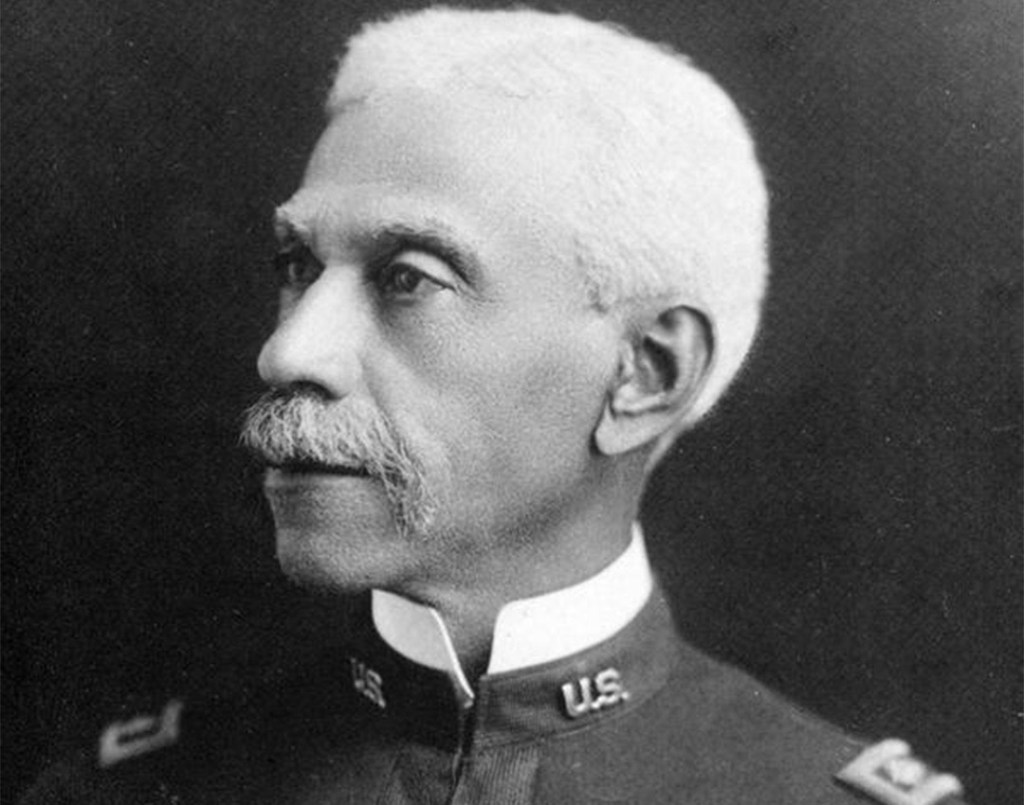
Born in 1842, Allensworth was 12 years old when he defied a Kentucky law that prohibited enslaved people from learning to read or write. As punishment for learning to read, Allensworth was sent to work on a plantation in New Orleans. After the Civil War began, he escaped and went to work as a civilian nurse in the Army, then joined the U.S. Navy. After the Civil War ended, Allensworth continued gaining knowledge and civic responsibilities, becoming an ordained minister. In 1886 he became the chaplain for the all-Black 24th Infantry Brigade, known as the Buffalo Soldiers.
By the time he retired as a Lieutenant Colonel in 1906, Allensworth was the highest-ranking Black man in all of the U.S. Armed Forces of the era. There is much more to his story, and during Black History Month and year-round, visitors can learn more about Col. Allensworth at the state historic park named in his honor. Located in California’s Central Valley, the Colonel Allensworth State Historic Park hosts a variety of events highlighting the extraordinary life and accomplishments of Col. Allensworth and the community he founded in the 1900s.
These events link important facets of California’s and America’s history: the enduring connection between Black Americans, education, military service, and civic improvement.
California is dedicated to providing accurate history of all its past residents, including Col. Allensworth and the African American township he founded. Those who venture to Colonel Allensworth State Historic Park get an accurate lesson into a little-known part of California’s story and one that is centered by a proud history of distinguished military service by the park’s namesake.
Col. Allensworth initially ventured west along with a small group of other Black former military servicemembers who sought to leave behind racially discriminatory policies and practices that were prominent in many Southern states during the era. The Tulare County region where Allensworth and his cohorts eventually purchased more than 80 acres is located near what once was the largest freshwater body in the west, Tulare Lake. By 1912, several hundred Black people had moved to Allensworth, where a bank, a church, and a school comprised the core of civic life. Sadly, Col. Allensworth died in 1914 after being hit by a motorcycle, and over the ensuing decades without its titular champion and leader, the town failed to thrive.
The Colonel Allensworth State Historic Park offers a number of events each year, including a Black History Month event in February, an Allensworth Festival in April, a Juneteenth Celebration in June, and an Annual Rededication in October. Visitors will learn more about Col. Allen Allensworth and how his vision for a just society and civic engagement, including military service, became a storied part of California history.
IF YOU GO: Colonel Allensworth State Historic Park is located off of State Highway 43 (the Central Valley Highway) near Earlimart. Learn more about the park at parks.ca.gov/?page_id=21298.
California State Parks offer the Distinguished Veterans Pass to eligible veterans, who enjoy free vehicle day use, family camping, and boat use at over 100 California State Parks-operated units. Learn more about eligibility requirements at parks.ca.gov/?page_id=30958.
 calvetconnect.blog